Mamdani: Contextualizing Nuremberg
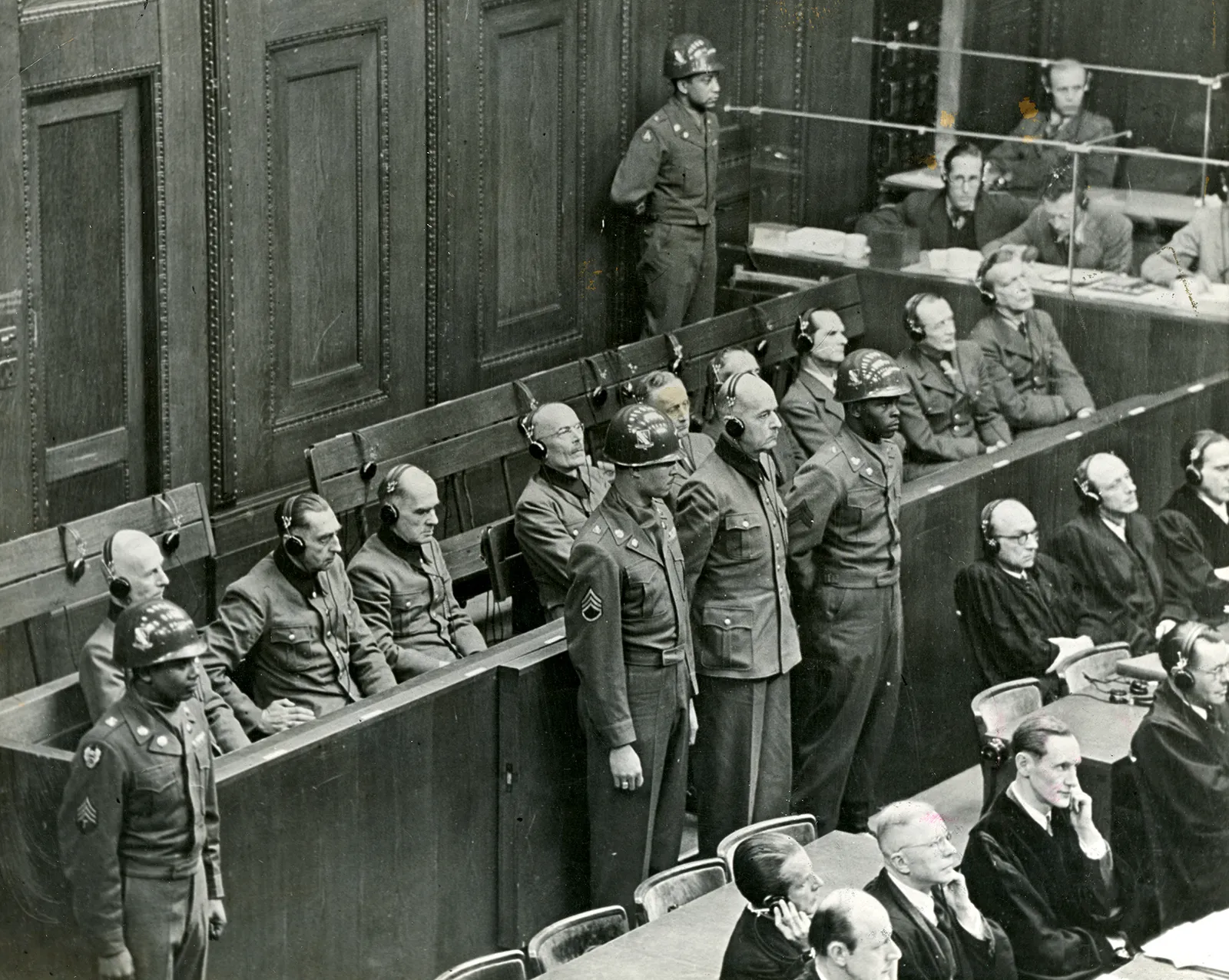
After the German surrender in World War II, the Allied powers conducted the Nuremberg Trials, a new global standard of justice disguised as a series of court proceedings. As the victors accused Germans of unspeakable crimes, they simultaneously directed the removal and repatriation of thirty-one million Germans in order to redefine post-war borders. Mamdani writes, “In scenes reminiscent of the Holocaust, [expellees] were packed into trains…‘without adequate (or, occasionally, any) food, water or heating’ and…herded into former Nazi concentration camps including Auschwitz” (Mamdani 117). As a reader (and likely relevantly, as an American), I found this shocking for two main reasons. First, this history alters my own subconscious understanding of the Allied powers as totally morally superior in World War II. Mamdani does mention additional Allied wrongdoings, such as American Jim Crow laws and relentless British bombings. However, the expulsion example is especially impactful because it so closely imitates Third Reich policies. Its very setting weakens the reader’s impulse to attribute the rights violation to some unknowable context that could potentially justify it. The second effect of Mamdani’s inclusion of this history is the redefining of the Nuremberg Trials. It seems unlikely that the trials could have represented true justice given the blatant hypocrisy of their executors. The post-war removal of ethnic Germans was both surprising and perspective-altering for me, someone who has only been exposed to World War II and its aftermath while immersed in the cultural mythology of American exceptionalism.
Works Cited
“Hermann Göring at the Nuremberg Trials.” Encyclopædia Britannica, www.britannica.com/event/Nurnberg-trials#/media/1/422668/94295.
Mamdani, Mahmood. “Nuremberg: The Failure of Denazification.” Neither Settler nor Native: The Making and Unmaking of Permanent Minorities, The Belknap Press of Harvard University Press, 2020, pp. 105–120.
